 We begin in the realm of rumor: A voice on the telephone has told me that Brent Wilkes, the man who bribed Congressman Cunningham, may now be looking for property in Belize. Is that true? I cannot say -- but who would be surprised? (Apparently, I wasn't the only one to hear that voice.)
 Poor Gina! She no doubt had planned such a lovely Christmas party this year...
Today's topic is the relationship between Wilkes and the CIA. Perversely, I'll begin with an historical anecdote that has nothing to do with Wilkes -- at least, not so far as I know -- but which does shed a certain light on his world and how it operates. I'll try to make the narrative as entertaining as possible.
The Legitimate Businessmen's Club. You will read the fullest account of this tale in Joseph Trento's Prelude to Terror (a book I've recommended perhaps too many times), although you can find the gist of it here and here.
Once, in a faraway land called the 1980s, Saddam Hussein and "Poppy" Bush were -- believe it or not! -- the bestest of buds. At that time, some CIA-linked Legitimate Businessmen went over to Iraq to sell military items. Technically, these businessmen were not of the CIA (in the sense of being on the official payroll), yet they maintained close connections to the Agency and to the military. As I've said many times, you can't understand modern history unless you know about these "spooky" informal networks, in which the players receive both start-up capital and connections from covert sources.
One of these Agency-linked arms merchandisers was Sarkis Soghanalian (who had befriended Trento, which is how Trento came to know about this stuff). Business proceeded smoothly; Saddam received cluster bombs, battle choppers, guns, and and even lovelier bits of merchandise.
Somewhere along the way, a mafia-like group of Republican operatives -- which included Richard Nixon and his old "pals" -- muscled onto the scene. In short and in sum, they demanded a hefty cut of Operation Arm Saddam.
This second wave of Legitimate Businessmen made a deal with Saddam to supply the Iraqi military with uniforms. I've seen varying estimates as to how much money this scheme was worth; the high figure is $450 million. The group promised high-quality uniforms manufactured by "their" plant in Tennessee. Actually, the job was off-shored to a Romanian firm known for producing clothing on the ultra-cheap. This decision insured that, instead of making big profits, the Republican mobsters could make big, big, BIG profits.
Saddam's people were not happy when they opened up the boxes and discovered wool uniforms. In a desert country, in the summer, wool is rarely the soldier's first choice.
You would think that Saddam Hussein would refuse ever again to deal with this group. In fact, they became more powerful than ever: They drove out Soghnalian and pretty much took over the weapons trade in Iraq. They did not actually produce the needed goods and services; job orders were farmed out to the low-ball bidders.
These men practiced the most perverse form of capitalism. The greatest rewards went to thugs who did not actually make anything -- who had, in fact, wedged themselves between the consumer and the producers, neither of whom wanted or needed the services of middlemen. Saddam had no choice but to go along with an operation that had acquired the blessings of Republican bigwigs.
Where did the money go? Did the loot merely line pockets -- or was it put to partisan use?
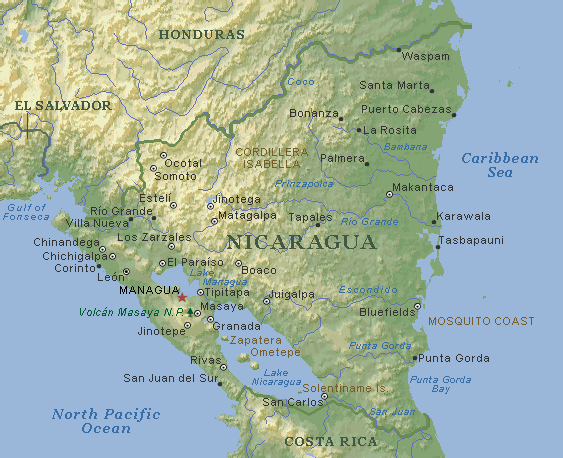 More history. (Bear with me: This part will eventually link up with Wilkes and company.) Ronald Reagan wanted to change governments in Nicaragua, but Congress wouldn't let him arm the contra rebels directly. Private fund-raising efforts took over.
General John K. Singlaub hit up the usual right-wing gazillionaires in the United States. The Sultan of Brunei -- the world's richest man -- made a heavy donation to a cause he cannot have cared about. The Saudis kicked in some $32 million. In a deal brokered by "Scooter" Libby and Oliver North, China provided the contras with tons of equipment, including surface-to-air missiles.
Then things got really weird.
The press started talking about "spooky" drug flights involving such characters as Barry Seal. The notorious Medellin cocaine cartel funded the ARDE contra faction, while the rival Cali cartel funded the FDN contras. Eden Pastora's contra group received funding from a Costa Rican/Panamanian cocaine network. Bush favored the FDN, which is why the American press at that time focused on Medellin and rarely mentioned Cali.
Reagan deregulated the Savings and Loan industry, opening the way for a horde of sharpsters who looted America to the tune of nearly a trillion dollars. As Steve Pizzo and Pete Brewton discovered, many of those "business crooks" -- Stefan Halper, Robert Corson and Herman K. Beebe being perhaps the most interesting examples -- had military and intelligence connections. We were told that no small amount of the looted money went to the contras.
Toward the end of the 1980s, the press offered some strange reports out of the Philippines: Singlaub was in that country searching for the semi-legendary caches of gold and other valuables that the Japanese had buried on the island during WWII. At the time, a few articles suggested that Singlaub was really trying to steer some of Marcos' ill-gotten loot toward the contras. Other sources say that the Japanese treasure had indeed been dug up piecemeal over the decades, and that this unimaginable bounty was used, in part, to finance the anti-Sandinista effort.
Millions from the notorious BCCI bank were diverted "to the contras." Israel contributed a steady flow of arms to the contras. The scandal over the stolen PROMIS software was, in some early reports, tied to contra arming and financing. Money siphoned from military sales to Saddam Hussein (mentioned above) had contra links.
And of course, Reagan's illegal arms sales to Iran resulted in hefty profits being diverted to the contras. That's why they called it the Iran-Contra affair.
I've summarized with an almost criminal brevity a lot of sordid history, and I've done so to emphasize one point: Every time a new scandal popped up during the 1980s and early 1990s, the same refrain appeared: "It's all about funding the contras!" Money from arms sales, cocaine, heroin, gold, S&Ls, crooked banks, gambling, software, bribery, Middle East financiers, "patriotic" donations -- it all went toward regime change in the small country of Nicaragua.
Supposedly.
Eventually, a few people started asking the obvious question: How much money did the contras need? Were they firing gold bullets down there?
In fact, fighters within the contra movement always insisted that they were seriously underfunded. Do not dismiss this assessment. The Sandinista army was hardly one of the world's most impressive fighting machines, yet the contras never seemed to make much headway against them. The FDN won only when the Nicaraguan electorate finally -- literally -- cried "uncle."
But if others grabbed much of this "contra" money -- where did it go? Were pockets lined, or was the clandestine cash used for partisan purposes?
Brent and Dusty. At least 35 years ago, Brent Wilkes' formed a close friendship with Kyle "Dusty" Foggo. They traveled the same respectable-though-not-exemplary academic path together: High School, Southwestern Community College, San Diego State University. Wilkes, some say, was a violent hot-head who brutalized anyone who looked weaker. One source told me that, even in those days, Wilkes and Foggo were obsessed with attaining power -- a goal few young people dared to express at a time when the scent of 60s pacifism still perfumed the air.
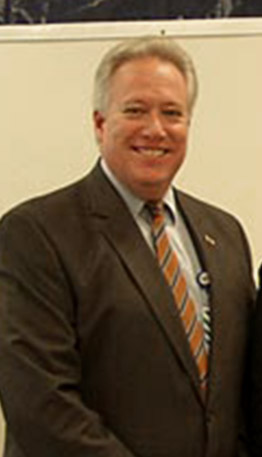 Dusty Foggo became first a cop, then a D.A.'s assistant -- and then was recruited into CIA, where he now holds the third-highest position. Some say that he was always more of a desk jockey than a James Bond, but he did do a stint in Honduras during the contra war. He handled their financing.
And now you know why I spent so much time describing all that money that went to the contras -- and perhaps elsewhere.
As for Wilkes: In college, he had studied accounting, which some might consider an odd choice for a bully with dreams of conquest. Like Foggo, he often bragged about his Agency connections. The world doth not love a wide-mouthed spook, or so I've been told -- yet braggadocio seems not to have harmed the career of these two gentlemen. Much evidence supports the contention that Wilkes became a Legitimate Businessman in one of the networks outlined above: He was not of the Agency, in the sense of drawing a regular paycheck, but he became one of those "outside" businessmen who prospered by aiding the Agency, or a faction within it.
According to the San Diego Union Tribune, one of his early business ventures was very, very noteworthy:
Wilkes had moved to Washington, D.C., and opened a business named World Finance Corp. about three blocks away from the White House. One of his chief activities, sources say, was to accompany congressmen -- including then-Rep. Bill Lowery of San Diego, whom Wilkes met during his participation in the SDSU Young Republicans organization – to Central America to meet with Foggo and Contra leaders.This passage is somewhat misleading in its implication that Wilkes created the World Finance Corporation, which actually had its origin point while Wilkes was still in school. This was no ordinary financial firm; it was once quite notorious. Before there was BCCI, there was the World Finance Corporation -- a CIA-linked money laundromat that probably had recruited Wilkes earlier than the SDUT story indicates.
 Perhaps the fullest history of WFC's origins can be found in Hank Messick's 1979 expose of the drug trade, "Of Grass and Snow." The financial institution originated with an anti-Castro Cuban named Guillermo Hernandez-Cartaya, who had been a banker before the revolution. Hernandez-Cartaya joined the CIA's efforts to unseat the dictator, playing a role in the Bay of Pigs. He began the WFC in Coral Gables, Florida in 1971; in the words of Hank Messick, "one did not have to be an international banker to recognize that Hernandez-Cartaya had some very wealthy and powerful backers." According to one account, start-up capital was funneled by way of another CIA associate and Bay of Pigs veteran, Salvador Aldereguia-Ors.
Although it began with just five employees and $500,000 capitalization, the bank was somehow able, just a year later, to loan Panama $10 million. By 1976, WFC had branches in numerous cities and was doing half-a-billion dollars worth of business internationally.
If, as I suspect, Wilkes joined forces with WFC in the mid-1970s, he may have played a role in the creation of a spin-off called the Dominican Mortgage Corporation, which shared the same address as WFC's Coral Gables HQ. This group heavily invested in Vegas -- casinos, real estate development, even a detective agency.
WFC and DMC were the institutions of choice for narco-traffickers. From Messick's book:
Names and dates were given, and the amount of cocaine entering Las Vegas alone was placed at 340 pounds annually. Internal Revenue Service agents told of receiving word of a million in case being carried by courier from Las Vegas to Miami. They tailed the courier to WFC offices in Coral Gables. He entered the building with two suitcases; he came out empty-handed. In Brownsville, the shrimp fleet was reported to be bringing in narcotics in vessels owned by WFC.The building manager at Coral Gables was a CIA explosives expert. A member of the Santos Trafficante "family" directed one of the branch banks.
In short, the bank was both mobbed up and spooked up. David Yallop and Penny Lernoux report that, around this time, WFC formed alliances with Italy's fascist P2 lodge, which had gained control of the Vatican's finances. As readers know, P2 "graduates" such as Michael Ledeen have played a key role in engineering the current war.
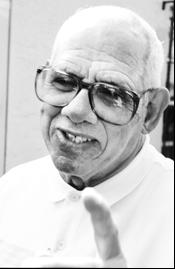 In 1976, the WFC's directors over-reached: They financed an anti-Castro terror group called CORU, headed by CIA "contact" man Orlando Bosch. They targeted not only Castro but any person or institution they considered overly sympathetic to him. That year, CORU conducted no less than 50 bombings in New York, Panama, Miami, Venezuela and other locations; they also appear to have had a hand in the assassination of Orlando Letelier.
 In October, they bombed a Cuban passenger jet. "All of Castro's planes are warplanes," an unrepentant Bosch later explained.
Bosch was eventually arrested and held in prison, until he was pardoned by the first President Bush, who had been CIA Director when Bosch went on his terror rampage. Even though Bosch had received his funding from a CIA-affiliated bank, DCI Bush had done nothing to rein him in.
From Peter Dale Scott's Cocaine Politics:
Another CORU crime was the botched kidnapping of the Cuban consul (and the murder of his chauffeur) in Merida, Mexico, on July 23, 1976, only a month after the group's founding. WFC's drug money financed this operation, and WFC's founder, Hernandez Cartaya, may even have helped plan it.When Bush gave way to Stansfield Turner, the Agency realized that their Cuban contingent had grown arrogant and beyond control. Local Florida cops and the FBI continued to scrutinize the WFC's interactions with drug traffickers. Embarrassing news stories started to appear. The heat, as they say, was on.
The Agency stymied the FBI's work. So did the IRS, which argued that the WFC was best left alone -- after all, they kept all those narco-dollars in the country.
WFC stayed in business -- yet, obviously, something had to be done about the Cubans who ran the place.
In 1978, Hernandez-Cartaya was arrested on a charge of using a fake passport -- a misfortune which tends to befall spooks who fall out of official favor. His partner, Salvador Aldereguia-Ors, was found in the possession of "evidence" (almost certainly bogus) linking him to Castro's intelligence services. When his cousin mysteriously died after putting up bail money, Aldereguia-Ors pulled a vanishing act. Hernandez-Cartaya eventually got out of jail and involved himself with S&L skullduggery.
To put the matter crudely: The CIA put honkies in control of the operation. Among them, it seems, were Brent Wilkes, who (as per the San Diego Union Tribune) opened the WFC office in DC, and Dusty Foggo, who funded and oversaw the anti-Castro Cubans operating in the Salvadoran and Nicaraguan conflicts.
The beast was bridled, but resentments lingered. I believe that the conflict between the CORU cadre and the Turner-ized CIA provides one origin point for the current split between the neocons and the Agency.
(An interesting side-note: WFC had formed a partnership in an Arab bank with Sheikh Naomi, ruler of the small emirate of Ajman. After the 1978 shake-up, the Sheik transfered his affections -- so to speak -- to BCCI.)
WFC still operates in a number of cities; contact information for the Augusta branch is here. Feel free to ring them up and ask if they still launder drug money or do favors for the CIA.
Their specialty now is providing loans to people with poor credit histories. They also -- oddly enough -- sell furniture.
This is noteworthy. Readers will recall that MZM -- run by Wilkes' friend and former employee Mitchell Wade, another man with a CIA background -- reportedly supplied furniture to the West Wing of the White House, an odd task for a firm devoted to intelligence and defense. (According to this story, MZM provided furniture and computers to Cheney's offices.) I have speculated, in the past, that this "furniture" was bugged.
I have no idea how WFC and Wilkes came to part ways. His next employer, according the the SDUT, was "Aimco Financial Management of La Jolla."
His chief duty was to bring in politicians, including Lowery, to talk to Aimco clients about how new laws might affect their finances.Aimco Financial Management of La Jolla has disappeared. It did exist at one time, and Friedman did make contributions to Lowery (presumably at Wilkes' urging). More recently, Friedman was caught out in a much larger scandal involving an entity called Global Money Management, which has been described as a Ponzi scheme in which many an investor was defrauded.
Aimco ran into trouble after securities regulators accused its founder, Marvin I. Friedman, of taking $268,000 of a client's funds in 1991.
Unfortunately, I have not yet been able to determine is whether the Wilkes/Friedman AIMCO was a subsidiary of this company which owns a massive number of this country's apartments. This AIMCO has had connections (via Director Norman Brownstein) to the CIA and the Bush family.
ADCS, the company Wilkes headquartered in Poway, was founded on software designed by a German firm called VPMax. I think we should see VPMax's role in this as analogous to that of the Romanian concern which provided those wool uniforms to Saddam Hussein. As I suggested earlier, Wilkes empire is largely a collection of false fronts built on a small foundation of "real" products, usually taken from other, smaller players.
And from there, we enter the current scandal. About which, more to come soon.
Until then, consider: Wilkes' firms received millions of taxpayer dollars; Daniel Hopsicker puts the amount at $700 million, although mainstream journalists speak of a much lower figure. Regardless of the amount, sources agree that the Defense Department did not really like or need his document conversion services. And Wilkes' list of companies included obvious fakes.
So once again, the question confronts us: Where did the money go?
This time, we have a pretty clear answer -- in the form of the many political contributions (and outright bribes) made by Wilkes' many subsidiaries.

12 comments:
Prelude to Terror is a good book, as is Trento's earlier The Secret History of the CIA. Trento's blog is also worth keeping an eye on.His latest entry is especially interesting. It can be found at:
http://www.storiesthatmatter.org/wordpress/
Aimco Financial Management appears to have been incorporated as AIMCO Securities Co. Inc. Their corporate charter is listed as 'suspended'. It appears to have been a distinct entity from the apartment-ownign AIMCO.
Actual copies of their records can be ordered, but there is a several week processing time.
Marvin I. Friedman is in trouble again with the SEC:
The Commission filed its complaint on March 11, naming San Diego-based Global Money Management, L.P., (GMM) an unregistered private hedge fund, LF Global Investments, LLC (LF Global), which operated GMM, and Marvin I. Friedman, 65, of La Jolla, California, who controlled both entities. The Commission's complaint alleges that the defendants grossly overstated the assets of GMM to investors.
His more recent bogus company is also based out of La Jolla
Thanks, silence. I spent the damnedest amount of time looking to hook up the two AIMCOs, but so far, the link just doesn't seem to be there. Your link tells us the Friedman -- a multi-million $$ scamster -- ran Aimco Securities and was thus Wilkes' boss or partner. I wonder how they linked up? Now THIS page...
http://cspan.politicalmoneyline.com/cgi-win/x_pacpg.exe?DoFn=C0025288292
...tells us that Friedman's treasurer was F. Laurence Scott. And THIS story...
http://www.sdreader.com/php/cover.php?mode=print&id=20021024
...tells us that Scott was a CPA who handled Pete Wilson's campaign finances.
Joseph: I think you found the treasurer of his PAC. There are only about 50 campaign treasurers in California at any given time, and they're basically hired guns without much in the way of partisan affiliation. Its pretty common to find them servicing sleazy operations and respectable candidates at the same time.
FWIW, I found Marvin Friedman's original citation by the NASD:
Marvin I. Friedman (Registered Principal, La Jolla, California) was fined $120,000, barred from association with any NASD member in any capacity, and ordered to reimburse his member firm $815,634.94.The sanctions were based on findings that Friedman received $990,000 from a public customer to form a limited partnership with the customer, misappropriated $268,000 of the funds, and failed to deposit into a brokerage account or return $547,634.94 of the original funds the customer contributed to the partnership. Friedman also failed to respond to NASD requests for information.
I get the impression that Marvin Friedman made his living for the past twenty years entirely through securities fraud.
Marvin I Friedman has been indicted on fraud charges, along with several others involved in his scheme:
United States Attorney Carol Lam announced the unsealing of a criminal Indictment in San Diego federal court yesterday, charging MARVIN IRWIN FRIEDMAN, PAUL HENRIE LEVY, and ALICE MAE SWIDERSKI with one count of Conspiracy, eight counts of Mail Fraud, eight counts of Wire Fraud, eleven counts of Money Laundering, one count of False Statement to Government Agency and seven counts of Tax Fraud in connection with their participation in a scheme to defraud investors in the Global Money Management hedge fund.
I am indeed very curious as to how Wilkes got roped into the whole thing with Friedman.
I've got a wild guess about how Wilkes jumped ship from Aimco to Audre.
Thomas F. Casey, who rean Audre, was involved in stock scams too:
The Securities and Exchange Commission filed a civil injunctive action in the federal district court for the District of Columbia alleging that Thomas F. Casey, the chairman and CEO of Audre Recognition Systems, Inc., ordered fraudulent nondisclosures in Audre's filings with the Commission, directed the falsification of corporate records, and made materially false statements to Audre's auditors in 1993 and 1994. Audre, based in San Diego, California, develops and markets document-conversion software.
Somehow, the San Diego Union-Tribune article only picked up on his bankruptcy, not the associated attempt to loot Audre.
silence, I wish I could pay you. Thanks so much. I've posted your finds in a breif squib that should appear above this post.
Brilliant! Wow. This is one powerfully compelling hypothesis. May I add to the mix a couple tidbits of information from my spheres of influence?
Luis Posada Carriles sits in an El Paso, Texas, jail cell awaiting an immigration hearing. Dept. of State refuse to extradite him to Venezuala, where he Carriles faces charges of terrorism. Amusingly, DoS fears that Posada, if extradicted, may face torture in the hands of the Venezualan government. (We really have stepped through the looking glass. Up is down.) Anyhow, Posada was/is a CIA asset going back to Poppy's days as DCI.
Additionally, Santiago Alvarez was arrested at his home in Florida just in November. Following his arrest, "But a federal source told The Miami Herald that ICE agents suspect Alvarez recently received counterfeit Guatemalan passports, the basis for the search."
Well, you have my full attention. Please let me know if I can help with any research...
-dqueue
HI Blogger! Happy NEW YEAR!!
All the best in 2006!
Regards, Albert financieringen
re: AIMCO. . . except the Halliburton connection through Martin Landis?
Een financiering in Nederland kan je het beste op een plak afsluiten; beterlenen. Hier is alles goed geregeld! Alles wordt je uit handen genomen!
Post a Comment